Artificial Intelligence in Modern Physics Research
Summer 2026 Research Experience for Undergraduates
The Department of Physics at Washington University in St. Louis is excited to host a NSF-funded Research Experience for Undergraduates (REU) program, entitled: Artificial Intelligence in Modern Physics Research, led by Professors Alex Chen and Li Yang with support from various other faculty members and department personnel.
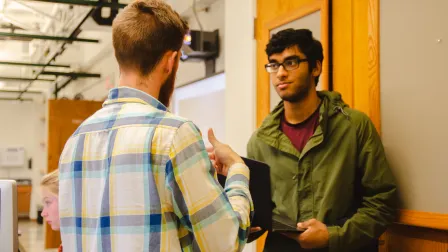
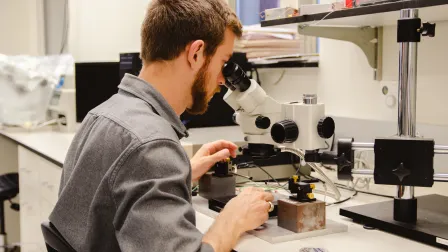
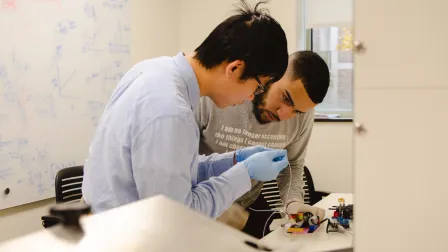
This 10-week summer research program provides undergraduate students a mentored research experience in cutting-edge physics, combined with professional development and opportunities to network with faculty and peers. Participants gain hands-on research experience that builds skills essential for graduate study and scientific careers. Students apply machine learning and AI techniques to advanced physics research problems while working alongside world-class faculty and researchers. The program begins with a one-week PyTorch and machine learning bootcamp, followed by 9 weeks of mentored research. At the conclusion of the program, students have the opportunity to present their work at a research symposium.
Research Areas
The program offers mentored research opportunities in many subfields of physics, all augmented with the application of AI and machine learning. The projects available this year will be focusing on the following subfields:
- Astrophysics
- Condensed Matter Physics and Quantum Materials
- Quantum Sensing
Program Structure, Professional Development, & Outcomes
The 10-week program is designed to immerse students in research while providing structured training, professional development, and community-building opportunities.
What to expect during your summer at WashU
During Week 1, participants take part in orientation activities, a campus tour, research ethics training, and a four-day machine learning bootcamp focused on PyTorch.
From Weeks 2 - 10, students work closely with an assigned faculty mentor on a research project (approximately 35 hours per week) while also participating in professional development activities (approximately 5 hours per week).
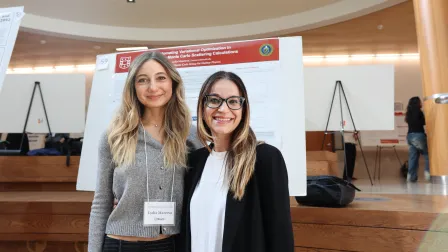
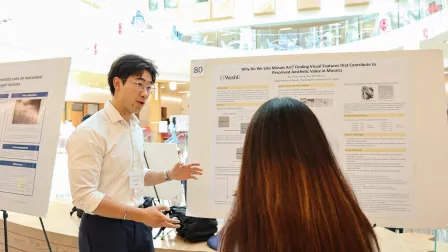
The program concludes in Week 10 with a research symposium, where students deliver 15-minute presentations on their work.
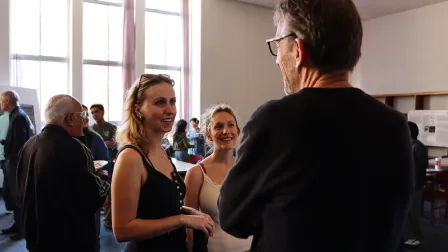
Throughout the summer, participants engage in a robust professional development program that includes weekly lunch seminars featuring faculty research talks and industry speakers. Friday social events - such as trivia lunches - provide informal opportunities to connect with peers and other summer researchers. Additional programming includes panel discussions on graduate school applications, career planning, and presentation skills, as well as joint networking events with other WashU summer programs.
By the end of the program, students gain hands-on training in PyTorch and modern machine learning techniques, meaningful research experience in a world-class physics department, and preparation for graduate school and scientific careers. Participants develop transferable AI and data science skills applicable across STEM fields and beyond, build professional networks with faculty and industry researchers, and may have opportunities to contribute to peer-reviewed publications.
Eligibility
- US citizens or permanent residents only
- Undergraduate students in any STEM field (not limited to Physics majors)
- No prior machine learning experience required
We especially encourage applications from:
- Students at non-PhD-granting institutions
- Students from the Midwest region (Missouri, Southern Illinois)
- Students without access to research opportunities at their home institution
Logistics
Dates: June 1 - August 7, 2026 (10 weeks)
Compensation: stipend provided ($700 per week, for 10 weeks), travel expense covered
Housing: Rooms in WashU Summer Intern & Research Housing, close to campus, with complimentary laundry facilities
Contact Information
PI: Alex Chen, Co-PI: Li Yang
Questions? Email reu@physics.wustl.edu