Edwin Thompson Jaynes Fellowship

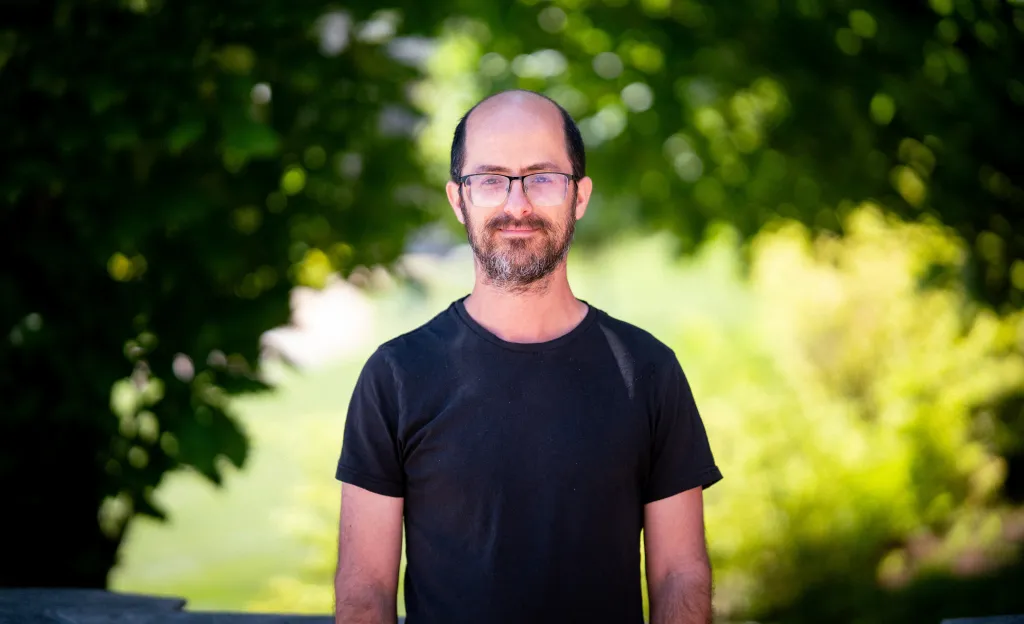
Brookings Hall seen from ground level in the summertime

Edwin Thompson Jaynes Fellowship

The Department of Physics at Washington University in St. Louis invites applications for the Edwin Thompson Jaynes Fellowship.

We welcome applicants with interests in the research areas of the Department of Physics (Nuclear and Particle Physics, Condensed Matter Physics, Quantum Information, Biophysics, and Astrophysics and Cosmology). The Fellowship is a prize fellowship managed by the Department of Physics. Successful candidates are expected to propose a tentative research program, and to further develop and refine that program during their fellowship at Washington University in St. Louis. The aim of the fellowship is to prepare the candidate(s) in the best possible way for faculty positions at research institutions or staff scientist positions at national laboratories. The awardees will pursue an independent research program, collaborating with one or several faculty members from the Department of Physics, as well as with other postdoctoral and graduate researchers in the department.

Jaynes Fellowships are anticipated to continue for three years, conditional to satisfactory yearly performance evaluations. Fellows will be assigned a faculty mentor or mentoring committee, as appropriate, to facilitate their scientific growth. Residence at the Department of Physics at Washington University in St. Louis is required. Successful applicants will be initially appointed as postdoctoral fellows and employment in this role is anticipated to begin July 1, 2026. 
Applications due December 15th, 2025.

Apply here

Edwin Thompson Jaynes Fellowship Symposium

Each fall semester, the Department of Physics proudly hosts the Edwin Thompson Jaynes Fellowship Symposium, an annual event that celebrates excellence, creativity, and discovery in physics research. The symposium serves as a showcase for the Jaynes Postdoctoral Fellows, who present the results of their ongoing work to faculty, students, and the broader university community. 

The event highlights the wide-ranging impact of the fellows' research - spanning areas such as theoretical and computational physics, condensed matter, astrophysics, and interdisciplinary studies that connect physics with emerging fields. Through engaging presentations and lively discussions, fellows share not only their scientific findings but also the curiosity, rigor, and innovation that drive their work. 

More than just a research showcase, the symposium reflects the spirit of Edwin T. Jaynes, whose career at Washington University was marked by a relentless pursuit of understanding and a deep belief in the power of ideas. By bringing together postdoctoral fellows, faculty mentors, and students, the Jaynes Fellowship Symposium underscores the department's commitment to supporting early-career scientists as they explore ambitious questions and chart new directions in physics. 
 

Edwin Thompson Jaynes

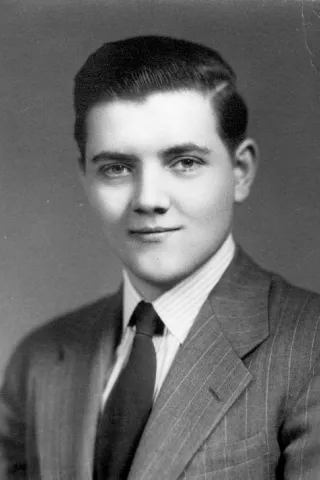
Edwin Jaynes

Edwin Thompson Jaynes (July 5, 1922 – April 30, 1998) was the Wayman Crow Distinguished Professor of Physics at Washington University in St. Louis. He wrote extensively on statistical mechanics and on foundations of probability and statistical inference, initiating in 1957 the maximum entropy interpretation of thermodynamics as being a particular application of more general Bayesian/information theory techniques. Jaynes strongly promoted the interpretation of probability theory as an extension of logic. In 1963, together with Fred Cummings, he modeled the evolution of a two-level atom in an electromagnetic field, known as the Jaynes-Cummings Hamiltonian of quantum optics. He is also known for the development of the maximum entropy principle, which provides a powerful framework for making statistical inferences based on incomplete or uncertain information; and his work on the foundations of Bayesian inference and probability theory. His work is of central importance for several fields, including engineering, economics, and computer science. 

Jaynes earned his bachelor's degree in physics in 1942 from Cornell College. After a delay because of World War II, he earned his PhD in physics from Princeton University in 1950, under his thesis advisor, Eugene Wigner. Wigner won the Nobel Prize in Physics in 1963. His dissertation was a calculation of the electrical and magnetic properties of ferroelectric materials. Ferroelectric materials are crystalline substances which have a permanent electric polarization (an electric dipole moment per unit volume) that can be reversed by an electric field. After a few years at Stanford, he moved to St. Louis, Missouri in 1960 and joined the physics faculty at Washington University.

Read more about Jaynes